
 Serums
 Creams & Moisturizers
 Eye Care
 Cleansers & Toners
 Masks & Treatments
 Complexion & Glow
 Body & Bath


Loss of Firmness: Why Skin Starts to Sag and How to Firm the Look
You notice it in photos first, or in the mirror at the end of a long day: the jaw isn’t quite as sharp, the cheeks sit a little lower, and skin that used to bounce back now seems to settle. This is loss of firmness — the gradual softening of the skin’s structure that is one of the earliest and most universal signs of aging. The good news: while you can’t stop the clock, firmness is one of the concerns skincare is genuinely built to support, and a great deal of what drives it is within your control.
This guide explains what firmness actually is, why skin loses it, where you tend to see it first, and the science-backed ingredients and habits that help skin look firmer and more lifted — no miracle claims, just what the evidence supports and how to build a routine around it.
What “firmness” really means
Firm, youthful skin owes its bounce to a scaffold deep in the dermis made mostly of two proteins: collagen, which gives skin its structure and density, and elastin, which lets it stretch and snap back. Woven through them is hyaluronic acid, which holds water and keeps the tissue plump and cushioned. When that scaffold is strong and well-hydrated, skin looks taut and lifted and recovers instantly when you smile or pinch it. As the scaffold weakens, skin becomes slack, thinner-looking and slower to recover — what we experience as a loss of firmness.
Importantly, sagging is rarely just about the skin’s surface. It’s a whole-structure change involving the deeper support layers too — which is why the most effective approach supports the skin’s own firming machinery rather than only smoothing the top.
Why skin loses firmness with age
- Collagen and elastin decline. From our mid-20s we lose collagen at roughly 1% a year, and production slows further after menopause. Elastin, once damaged, is very hard for skin to rebuild — so the “snap-back” fades.
- Facial fat pads shift and shrink. The cushions of fat that keep cheeks high and full deflate and slide downward over time, so support drops and contours soften.
- Bone remodeling. The facial skeleton subtly recedes across decades, reducing the framework that once held everything taut.
- Sun exposure (photoaging). UV is the single biggest controllable driver — it breaks down collagen and elastin and is estimated to account for the majority of visible facial aging.
- Glycation. Excess sugar binds to collagen and makes it stiff and brittle (“sugar sag”), so it supports the skin less well.
- Lifestyle. Smoking starves skin of oxygen and degrades collagen; rapid weight loss deflates support; and gravity and sleep position add up over years.
Where you notice it first
Loss of firmness tends to show in a predictable order, and knowing your “hot spots” helps you target care:
- The jawline and jowls. Often the first place people notice softening, as mid-face support drops and skin along the jaw loses definition.
- The cheeks and mid-face. Flattening or a slightly “deflated” look as fat pads shift — this also deepens smile lines.
- The neck and décolletage. Thin, oil-poor skin that ages early and turns crepey and slack — firmness care shouldn’t stop at the jaw.
- Around the eyes. Delicate skin that loosens into hooding and fine crêping.
The 30-second firmness self-check
Try this in the mirror to gauge where you are and what to focus on:
- The pinch-and-release. Gently pinch the skin on the back of your hand or your cheek and let go. If it springs back instantly, elasticity is strong; the slower it settles, the more your routine should prioritise firming and elasticity support.
- The lift test. Place fingertips at your cheekbones and gently lift up and out. If contours look noticeably more defined, much of what you’re seeing is support and firmness — exactly what firming actives target.
- The light test. Tilt toward a window. Slack skin reads as softer shadows along the jaw and cheek; well-supported skin catches light more evenly.
The ingredients that actually help
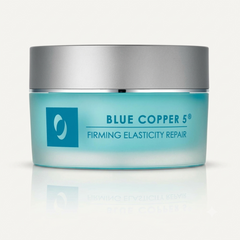
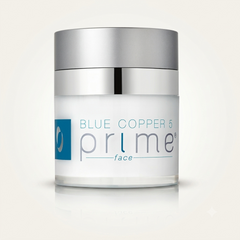
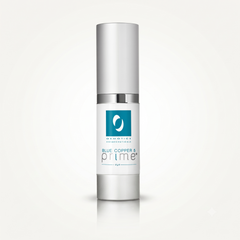
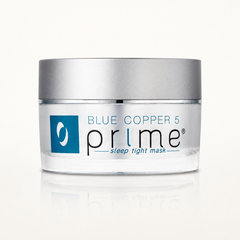
Copper peptides — the firmness cornerstone. Peptides are short chains of amino acids that signal skin to support its own structure. Osmotics’ signature copper peptides (Blue Copper 5) are among the most researched, studied for the look of firmness, density and renewal. For daily firming, the Blue Copper 5 Firming Elasticity Repair cream delivers them at their full studied dose, while the Blue Copper 5 PRIME Face cream is the clinical-strength option for thinner, more established skin. A short intensive course with the Blue Copper 5 Intensive Ampoule Series is a good way to reset tired, depleted skin.
Signal peptides like Matrixyl® 3000 — for collagen support. These matrikine peptides cue fibroblasts to support collagen and elastin, helping firm the look of skin gently — they’re built into our firming creams alongside the copper peptides.
Retinol — for collagen and skin quality. One of the best-studied anti-aging actives, retinol supports collagen and renewal to firm and smooth the look of skin over time. Introduce it slowly and always pair with morning SPF; our Anti-Aging Super Serum brings that renewing support into the routine.
Vitamin C — for collagen support and defense. A brightening antioxidant that is an essential cofactor in collagen production and helps defend against the UV damage that degrades firmness. Our Vitamin C Serum is a smart daytime partner to sunscreen.
Hyaluronic acid — for plumping and cushion. HA holds many times its weight in water, so skin looks plumper and more supported right away. A Hyaluronic Acid Serum layers beautifully under your firming steps.
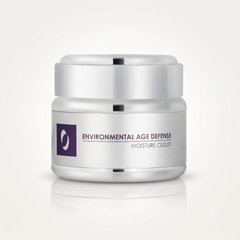
Barrier lipids and antioxidants — to protect what you build. A strong, well-defended barrier keeps skin resilient. A cushioning moisturiser such as the Environmental Age Defense Moisture Cloud supports the barrier while helping defend against pollution and daily stress.
The takeaway: firmness is a build-and-protect project — build with peptides, retinol and vitamin C; protect with daily SPF, antioxidants and a strong barrier; and plump with hyaluronic acid for immediate support.
Habits that make a real difference
- Wear SPF every day. The most effective anti-sagging habit there is — UV drives most collagen loss.
- Don’t smoke. Smoking measurably accelerates collagen breakdown and skin laxity.
- Eat for collagen and limit sugar spikes. Protein, vitamin C-rich foods and steady blood sugar support the collagen you have and limit glycation.
- Keep weight stable. Rapid loss deflates the support that keeps skin taut.
- Sleep on your back. Years of pressing one side into the pillow encourages creasing and slackening; a silk pillowcase helps too.
- Massage upward. Apply firming products with upward, outward strokes toward the cheekbone and hairline.
Building a simple firming routine
Morning: cleanse → Vitamin C Serum → a firming copper-peptide cream (Firming Elasticity Repair or PRIME Face) → always finish with SPF.
Evening: cleanse → Hyaluronic Acid Serum on damp skin → a renewing step a few nights a week (Anti-Aging Super Serum) → your copper-peptide firming cream to seal everything in.
Firmness builds gradually — expect visible change over several weeks of consistent, twice-daily use. If you’d rather start with a coordinated set, the Face Set Collection brings the core steps together, and firmness care extends naturally to the neck and chest and eye area. Individual results may vary.
How Osmotics approaches firmness
At Osmotics, firmness has been built around copper peptides at clinical strength since 1998 — because sagging is fundamentally a structure-and-support concern. Our firming heroes, Blue Copper 5 PRIME Face and Blue Copper 5 Firming Elasticity Repair, support the whole face, while Lipofill Skin Firmness Restoration targets lost facial volume and slackening around the cheeks and folds. Explore the full range in our Loss of Firmness collection, or find your match with the skin quiz. Individual results may vary.
When to see a professional
Topical care can meaningfully improve the look of firmness and skin quality, but it has limits. Consider a dermatologist or qualified practitioner if you want faster or more dramatic lifting than skincare can offer — options range from energy-based skin-tightening (radiofrequency, ultrasound) to injectables and, for significant laxity, surgical lifting. A strong firming routine helps maintain results and supports skin quality between treatments.
Frequently asked questions
Can skincare really firm sagging skin?
Skincare can visibly improve the look of firmness — supporting collagen, plumping with hydration and strengthening the barrier — especially for early-to-moderate laxity. It won’t reverse significant sagging the way an in-office lifting procedure can, but consistent firming care makes a real, visible difference and helps maintain skin quality.
What is the best ingredient for firmness?
There isn’t a single hero — the best results layer peptides (copper peptides and Matrixyl® 3000) for structure, retinol for collagen and skin quality, vitamin C for support and defense, and SPF for prevention.
At what age does skin start to lose firmness?
Collagen begins declining in the mid-20s, but most people notice softening from the late 30s and into the 40s, accelerating around menopause. Sun exposure and genetics can bring it forward or push it back.
How long until I see results?
Hydration and plumping can look immediate. Genuine improvement in the look of firmness builds gradually — typically several weeks to a few months of consistent, twice-daily use. Individual results vary.
Does collagen in food or supplements help?
A protein-rich diet supports your skin’s collagen-making, and evidence for collagen supplements is growing but mixed. Think of diet as a helpful support alongside — not a replacement for — topical actives and sun protection.
Is loss of firmness the same as wrinkles?
They overlap but aren’t identical. Wrinkles are creases in the surface; loss of firmness is slackening of the deeper support, which shows as softened contours and less “bounce.” Many routines address both at once with peptides and retinol.
Key takeaways
- Firmness comes from a deep scaffold of collagen, elastin and hyaluronic acid that weakens with age.
- The biggest drivers are collagen/elastin decline, shifting fat pads and sun damage — and much of it is controllable.
- Use the pinch-and-lift test to gauge your elasticity and where to focus.
- The most supported actives are copper peptides, signal peptides, retinol, vitamin C and hyaluronic acid.
- Daily SPF is the single most effective prevention habit; not smoking, stable weight and back-sleeping all help.
- Be consistent, give it several weeks, and see a professional for significant laxity.
This article is for educational purposes and describes the appearance of skin; it is not medical advice. Individual results may vary.