
 Serums
 Creams & Moisturizers
 Eye Care
 Cleansers & Toners
 Masks & Treatments
 Complexion & Glow
 Body & Bath


Retinol: The Complete Guide
Written by the Osmotics team · Reviewed by Elena Hart, MD, dermatologist · Last updated
The short answer
Retinol is a vitamin-A derivative and one of the best-studied anti-ageing actives — it speeds cell turnover and supports collagen, softening the look of fine lines, wrinkles, texture and dark spots. Start low and slow (a few nights a week), buffer with moisturiser, and always wear SPF the next morning.
Quick answer: Retinol is a form of vitamin A and the most researched anti-ageing ingredient in skincare. It speeds surface turnover and supports collagen, improving the look of lines, texture, tone and pores over time. The keys to success are starting low and slow, using it at night only, and always wearing SPF in the morning. Osmotics pairs retinol-style renewal with copper peptides for firmness.
What is retinol?
Retinol belongs to the retinoid family — vitamin-A derivatives. Once applied, skin converts retinol through a few steps into retinoic acid, the active form your cells respond to. It acts as a communicator, telling skin cells to behave in a younger, more active way: turning over the surface faster and supporting the deeper proteins that keep skin firm.
The retinoid family, from gentle to strong
Not all “retinoids” are equal. Roughly from mildest to strongest: retinyl esters (e.g. retinyl palmitate) → retinol → retinaldehyde → prescription retinoic acid / tretinoin. Stronger forms work faster but irritate more. Retinol is the sweet spot for most people: well-studied, effective, and available without a prescription.
What does retinol do for skin?
- Fine lines and wrinkles — by supporting collagen and speeding renewal.
- Rough texture and dullness — by accelerating the turnover of tired surface cells.
- Uneven tone and dark spots — by helping fade the look of pigmentation over time.
- Enlarged-looking pores and congestion — by keeping the pore lining clearer.
Results are gradual and build over weeks to months of consistent use.
How to use retinol without irritation
The most common mistake is too much, too soon. Start low and slow: a pea-sized amount at night only, two or three nights a week, on dry skin, building up as your skin tolerates it. Always follow with moisturiser, and — non-negotiable — wear SPF every morning, because retinol makes skin more sun-sensitive.
If your skin is dry or reactive, try the “sandwich” method: moisturiser, then retinol, then moisturiser again, to buffer it. A copper-peptide cream over the top does the same job while supporting firmness.
Retinisation: what “purging” really is
Redness, dryness or light flaking in the first few weeks is retinisation — your skin adjusting. It usually settles. If it happens, reduce frequency, buffer with moisturiser, and build back up slowly. Severe or persistent irritation means stop and consult a professional.
What to avoid layering with retinol
Be cautious using retinol in the same routine as strong exfoliating acids (AHAs/BHAs) or high-strength vitamin C, which can compound irritation. A common approach is vitamin C in the morning and retinol at night. Introduce one new active at a time.
Retinol vs. bakuchiol and copper peptides
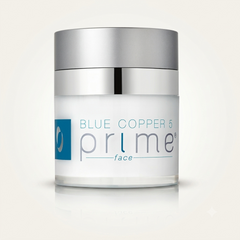
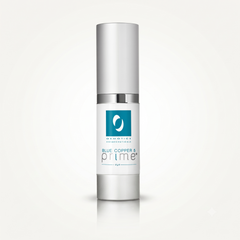
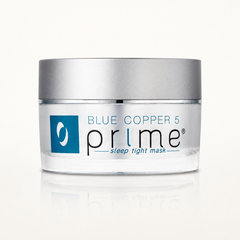
Bakuchiol is a plant-derived ingredient marketed as a gentler “retinol alternative”; it’s milder but less proven. Copper peptides aren’t an alternative but a partner — retinol renews the surface while copper peptides support the skin’s structure. Apply your serum first, then layer a copper-peptide cream such as Blue Copper 5 PRIME Face on top.
Who should be careful with retinol?
If you are pregnant or breastfeeding, the usual guidance is to avoid retinoids — speak to your doctor. If your skin is very sensitive or you have rosacea or eczema, introduce retinol slowly and patch test first. This guide is general education, not medical advice.
Osmotics and retinol
Our Anti-Aging Super Serum brings renewing, retinol-style support into the routine for fine lines, lost elasticity and dehydration together, and layers cleanly under your copper-peptide cream. Read the wider science at The Science, or find your match with the skin quiz.
Frequently asked questions
How often should I use retinol?
Start two to three nights a week and build up gradually as your skin adjusts. Many people settle at nightly or every other night.
Should I use retinol in the morning or at night?
At night. Retinol can be degraded by light and makes skin more sun-sensitive, so it belongs in your PM routine, always paired with morning SPF.
What is the difference between retinol and retinoic acid?
Retinoic acid (tretinoin) is the active form and is prescription-strength; retinol is converted to it in the skin, working more gently and available over the counter.
Can I use retinol with copper peptides?
Yes. Apply your serum first, let it absorb, then layer a copper-peptide cream on top, which also helps buffer dryness.
Can I use retinol with vitamin C?
Yes, but many people separate them — vitamin C in the morning, retinol at night — to reduce the chance of irritation.
Why is my skin peeling or red after starting retinol?
That is retinisation, the adjustment period. Reduce frequency, buffer with moisturiser, and build back up slowly. If irritation is severe or persistent, stop and consult a professional.
Can I use retinol while pregnant?
The common guidance is to avoid retinoids during pregnancy and breastfeeding. We can’t give medical advice — please check with your doctor.
How long does retinol take to work?
Texture and smoothness can improve within a few weeks; lines and tone change over several weeks to a few months of consistent use. Individual results vary.
Shop products with this ingredient
Osmotics formulas that contain a form of this ingredient (retinyl palmitate).
Shop products with this ingredient
Osmotics formulas that feature this active.
 Blue Copper 5® Intensive Ampoule Series
 is a concentrated copper peptide ampoule serum — an intensive ...
$80.00
Blue Copper 5® Intensive Ampoule Series
Blue Copper 5® Intensive Ampoule Series is a concentrated copper peptide ampoule serum — an intensive ...
$80.00
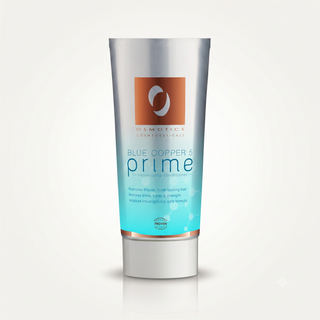 Blue Copper 5 PRIME® Volumizing Conditioner
 is a lightweight copper peptide conditioner with rice prot...
$80.00
Blue Copper 5 PRIME® Volumizing Conditioner
Blue Copper 5 PRIME® Volumizing Conditioner is a lightweight copper peptide conditioner with rice prot...
$80.00
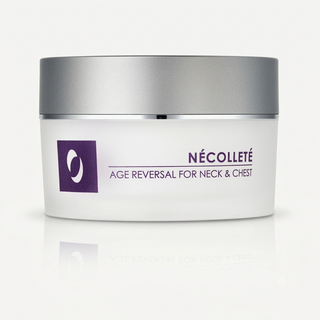 Nécolleté Age Reversal for Neck and Chest
Nécolleté Age Reversal is a peptide neck and chest cream built on Essenskin® to firm, re-densify and s...
$84.00
Nécolleté Age Reversal for Neck and Chest
Nécolleté Age Reversal is a peptide neck and chest cream built on Essenskin® to firm, re-densify and s...
$84.00
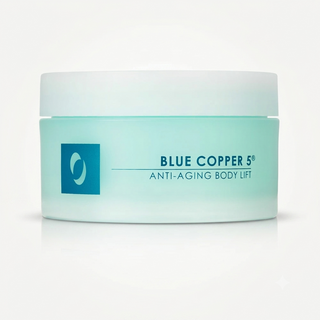 Blue Copper 5® Anti-Aging Body Lift
 is a copper peptide body cream that tightens and firms crepey, sla...
$144.00
Blue Copper 5® Anti-Aging Body Lift
Blue Copper 5® Anti-Aging Body Lift is a copper peptide body cream that tightens and firms crepey, sla...
$144.00
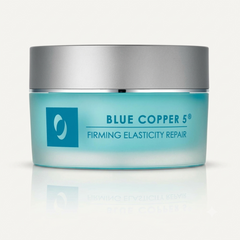
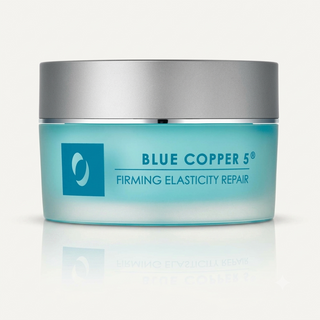 Blue Copper 5® Firming Elasticity Repair
 is a copper peptide regenerative firming cream with Matrixyl ...
$58.00
Blue Copper 5® Firming Elasticity Repair
Blue Copper 5® Firming Elasticity Repair is a copper peptide regenerative firming cream with Matrixyl ...
$58.00
 Inner Light Bio Defense Primer
 is a luminous radiance primer with Vitamin E — for dull, uneven skin th...
$49.00
Inner Light Bio Defense Primer
Inner Light Bio Defense Primer is a luminous radiance primer with Vitamin E — for dull, uneven skin th...
$49.00
 Radiance Illuminating Blush
 is a luminous cream blush with Vitamin E — for flat, tired-looking skin th...
$46.00
Radiance Illuminating Blush
Radiance Illuminating Blush is a luminous cream blush with Vitamin E — for flat, tired-looking skin th...
$46.00
References
- Mukherjee S, Date A, Patravale V, et al. Retinoids in the treatment of skin aging. Clinical Interventions in Aging. 2006;1(4):327–348.
- Kafi R, Kwak HSR, Schumacher WE, et al. Improvement of naturally aged skin with vitamin A (retinol). Archives of Dermatology. 2007;143(5):606–612.
This guide describes the appearance of skin and is general education, not medical advice; individual results may vary.