
 Serums
 Creams & Moisturizers
 Eye Care
 Cleansers & Toners
 Masks & Treatments
 Complexion & Glow
 Body & Bath


Hyaluronic Acid: The Complete Guide
Written by the Osmotics team · Reviewed by Elena Hart, MD, dermatologist · Last updated
The short answer
Hyaluronic acid is a humectant that holds up to 1,000 times its weight in water, instantly plumping and hydrating skin and softening the look of fine lines. Apply it to damp skin and seal with a moisturiser; it suits every skin type and layers well under peptides and retinol.
Quick answer: Hyaluronic acid (HA) is a humectant your skin already makes that can hold up to a thousand times its weight in water. It plumps the look of fine, crepey lines almost immediately and suits every skin type. The one rule: apply it to slightly damp skin and seal it with a moisturiser, so it draws water in rather than out.
What is hyaluronic acid?
Hyaluronic acid is a sugar molecule (a glycosaminoglycan) found naturally in skin, where its job is to hold water and keep tissue plump and cushioned. Levels fall with age, which is part of why mature skin looks flatter and more crepey. On a label it usually appears as Sodium Hyaluronate (a smaller, more stable salt form) and sometimes as a crosspolymer for longer-lasting hydration.
Molecular weight: why it matters
HA comes in different sizes. High-molecular-weight HA sits on the surface for an instant plumping, smoothing film; low-molecular-weight HA penetrates a little deeper for more lasting hydration. Good serums use a blend of weights so you get both the immediate and the longer effect — which is how our Hyaluronic Acid Serum is built.
What does hyaluronic acid do for skin?
- Instant plumping — draws water into the surface, so fine, crepey lines look softened and skin looks smoother right away.
- Lasting hydration — helps skin hold moisture through the day for a healthier, more comfortable feel.
- A better canvas — well-hydrated skin reflects light more evenly, so tone looks brighter and make-up sits better.
HA suits every skin type, including oily and sensitive, because it hydrates without heaviness or oil.
The one mistake to avoid
HA is a humectant — it pulls water toward itself. In a dry environment it can pull moisture out of deeper skin if there’s none in the air to draw from, which can leave skin feeling tighter. The fix is simple: apply HA to slightly damp skin, then seal it with a moisturiser on top. Never leave a hyaluronic serum bare on dry skin in a dry room.
How to use hyaluronic acid
Apply after cleansing, on damp skin, before your heavier creams: cleanse → hyaluronic serum (damp skin) → treatment → moisturise → SPF in the morning. It layers well morning and night and pairs with almost everything — one of the safest actives to add to any routine, and a good buffer for stronger actives like retinol.
Topical HA vs. injectable filler
They’re different things. Topical HA hydrates and plumps the surface and its effect is temporary and cosmetic. Injectable HA fillers place cross-linked HA deep in the skin to restore volume — a professional, longer-lasting procedure. Topical HA is a lovely everyday hydrator, not a substitute for filler.
Hyaluronic acid with copper peptides and retinol
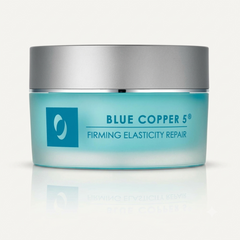
HA is a team player. Because retinol can be drying, a hyaluronic serum underneath and a copper-peptide cream over the top is a comfortable way to run all three. Try: hyaluronic serum on damp skin → your treatment → a copper-peptide cream such as Blue Copper 5 Firming Elasticity Repair to seal everything in.
Osmotics and hyaluronic acid
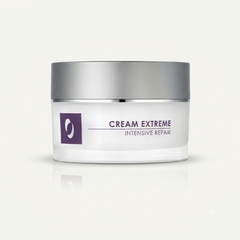
Our Hyaluronic Acid Serum delivers multi-weight hydration for tight, thirsty skin. For thinning lips and lip lines, Blue Copper 5 Lip Plumper uses needle-free hyaluronic plumping; for a broken, parched barrier, Cream Extreme Intensive Repair seals moisture in. Find your match with the skin quiz.
Frequently asked questions
Should I apply hyaluronic acid to wet or dry skin?
Slightly damp skin, then seal it with a moisturiser on top. On bare, dry skin in a dry environment it can draw moisture out rather than in.
What is the difference between hyaluronic acid and sodium hyaluronate?
Sodium hyaluronate is the salt form of hyaluronic acid — smaller and more stable, so it penetrates a little more easily. Both hydrate; good formulas often use several forms.
Can I use hyaluronic acid every day?
Yes — morning and night is fine for most people. It’s one of the gentlest, most universally tolerated actives.
Can I use hyaluronic acid with retinol and vitamin C?
Yes. HA pairs safely with almost everything and can make stronger actives like retinol more comfortable by adding hydration.
Does hyaluronic acid help with wrinkles?
It plumps the look of fine, dehydration-related lines quickly. It won’t rebuild deep structural wrinkles the way firming actives aim to, but it makes skin look smoother and more cushioned.
Is hyaluronic acid good for oily or acne-prone skin?
Yes. It hydrates without oil or heaviness, so it suits oily and combination skin as well as dry.
Which is better, hyaluronic acid or copper peptides?
They do different jobs and work best together. HA hydrates and plumps the surface; copper peptides support the look of firmness and structure over time.
How long does hyaluronic acid take to work?
The plumping, smoothing effect is often visible immediately and builds with consistent daily use. Individual results vary.
Shop products with this ingredient
Osmotics formulas that contain this ingredient.
Shop products with this ingredient
Osmotics formulas that feature this active.
 Hyaluronic Acid Serum
 is a multi-weight hyaluronic acid serum for tight, thirsty, dehydrated skin that...
$120.00
Hyaluronic Acid Serum
Hyaluronic Acid Serum is a multi-weight hyaluronic acid serum for tight, thirsty, dehydrated skin that...
$120.00
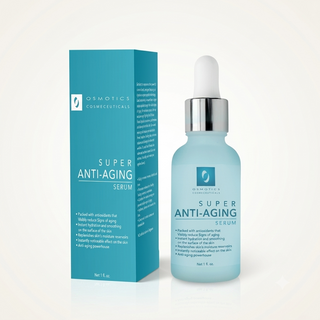 Anti-Aging Super Serum
 pairs copper peptide and Matrixyl® with multi-weight hyaluronic acid, for fine ...
$70.00
Anti-Aging Super Serum
Anti-Aging Super Serum pairs copper peptide and Matrixyl® with multi-weight hyaluronic acid, for fine ...
$70.00
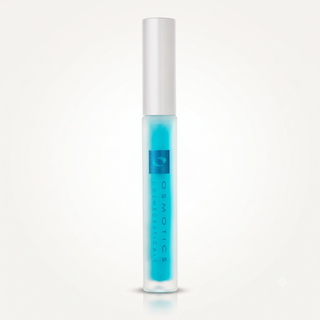 Blue Copper 5® Lip Plumper
 is a needle-free copper peptide lip plumper with hyaluronic acid, for thinn...
$74.00
Blue Copper 5® Lip Plumper
Blue Copper 5® Lip Plumper is a needle-free copper peptide lip plumper with hyaluronic acid, for thinn...
$74.00
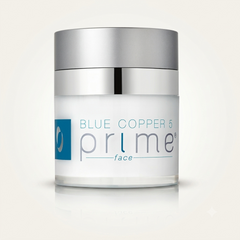
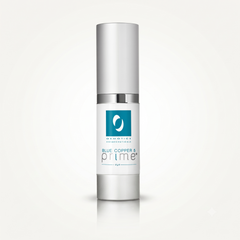
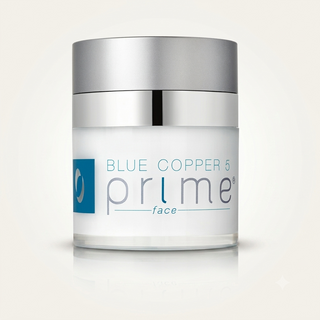 Blue Copper 5 PRIME® Face Cream
Blue Copper 5 PRIME® Face is our most advanced copper peptide face cream, with Matrixyl® 3000 and a fu...
$144.00
Blue Copper 5 PRIME® Face Cream
Blue Copper 5 PRIME® Face is our most advanced copper peptide face cream, with Matrixyl® 3000 and a fu...
$144.00
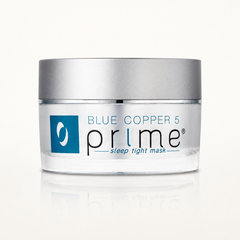
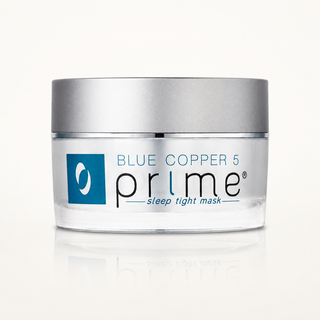 Blue Copper 5 PRIME® Sleep Tight Mask
 is a copper peptide overnight firming mask — Chrono-Active Repai...
$120.00
Blue Copper 5 PRIME® Sleep Tight Mask
Blue Copper 5 PRIME® Sleep Tight Mask is a copper peptide overnight firming mask — Chrono-Active Repai...
$120.00
 Inner Light Bio Defense Primer
 is a luminous radiance primer with Vitamin E — for dull, uneven skin th...
$49.00
Inner Light Bio Defense Primer
Inner Light Bio Defense Primer is a luminous radiance primer with Vitamin E — for dull, uneven skin th...
$49.00
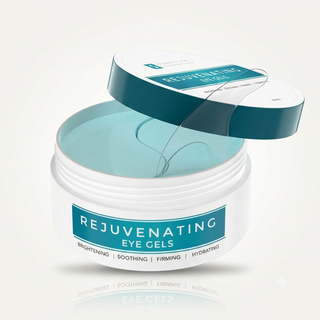 Rejuvenating Eye Gels
 are depuffing under-eye patches with niacinamide and hyaluronic acid, for puffy,...
$80.00
Rejuvenating Eye Gels
Rejuvenating Eye Gels are depuffing under-eye patches with niacinamide and hyaluronic acid, for puffy,...
$80.00
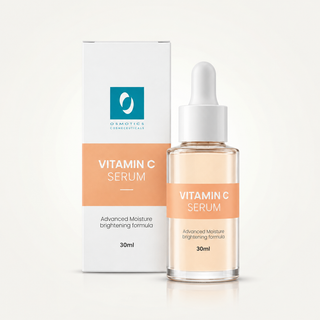 Vitamin C Serum
 uses a stabilised form of vitamin C — 3-O-ethyl ascorbic acid — for dark spots, hyperp...
$120.00
Vitamin C Serum
Vitamin C Serum uses a stabilised form of vitamin C — 3-O-ethyl ascorbic acid — for dark spots, hyperp...
$120.00
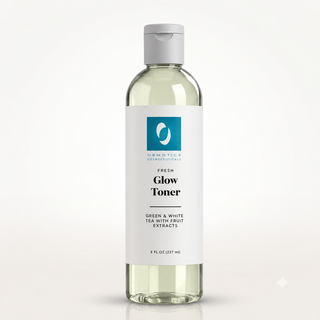 Glow Toner
 is a gentle mandelic acid and niacinamide exfoliating toner for dull, rough, uneven skin — ...
$48.00
Glow Toner
Glow Toner is a gentle mandelic acid and niacinamide exfoliating toner for dull, rough, uneven skin — ...
$48.00
References
- Papakonstantinou E, Roth M, Karakiulakis G. Hyaluronic acid: A key molecule in skin aging. Dermato-Endocrinology. 2012;4(3):253–258.
- Bukhari SNA, Roswandi NL, Waqas M, et al. Hyaluronic acid, a promising skin rejuvenating biomedicine. International Journal of Biological Macromolecules. 2018;120:1682–1695.
This guide describes the appearance of skin and is general education, not medical advice; individual results may vary.