
 Serums
 Creams & Moisturizers
 Eye Care
 Cleansers & Toners
 Masks & Treatments
 Complexion & Glow
 Body & Bath


Dark Circles and Under-Eye Bags: What Causes Them and How to Treat the Look
If you've ever been told you look tired when you feel perfectly fine, your under-eyes are probably to blame. Dark circles, puffiness and bags are one of the most common — and most misunderstood — skin concerns, partly because there isn't just one cause. What works beautifully for one person does nothing for another, simply because they're dealing with a different type of shadow.
This guide breaks down exactly what's happening beneath your eyes, how to identify your type, and the science-backed ingredients and habits that genuinely help improve the appearance. No miracle promises — just what the evidence supports, and how to build a routine around it.
Why the under-eye area shows everything
The skin around your eyes is the thinnest and most delicate on your entire body — roughly a fraction of the thickness of the skin on your cheeks. It has fewer oil glands, less collagen and elastin, and sits over a dense network of tiny blood vessels.
That combination is why the under-eye is the first place to reveal fatigue, dehydration, allergies and age. When skin is this thin, everything underneath it — blood vessels, pigment, the natural contours of the bone — shows through more easily. And because the area flexes constantly (you blink around 15–20 times a minute), it's prone to fine lines and crepey texture over time. Understanding that fragility is the first step, because it explains why the eye area needs its own dedicated, gentle care.
The 3 types of dark circles (and why it matters)
Dermatologists generally sort dark circles into three types, each with a different cause — and a different solution. Most adults actually have a mix of more than one, which is why a single-ingredient "fix" often disappoints.
1. Pigmented (brown) dark circles
These have a brown or tan hue and are caused by excess melanin in the under-eye skin. They can be genetic (more common in medium-to-deep skin tones), triggered by sun exposure, or left behind by rubbing and inflammation. How they behave: the brown tone stays fairly consistent regardless of lighting.
2. Vascular (blue/purple) dark circles
These show up as a bluish, purple or pink tint caused by blood vessels showing through thin skin, sometimes worsened by blood pooling or sluggish circulation. How they behave: they often look worse when you're tired, run-down or dehydrated, and can appear puffier in the morning.
3. Structural (shadow) dark circles
These aren't discoloration at all — they're a shadow cast by the contour of the face. With age we can lose a little volume in the "tear trough," or the area may simply be naturally hollow, creating a shadow that reads as darkness. How they behave: they change dramatically with lighting — harsh overhead or side light makes them worse, soft front light makes them nearly vanish.
The 30-second self-test
Not sure which you have? Try this in a mirror:
- Gently stretch the skin outward under one eye. If the darkness fades, it's likely vascular or structural. If the color stays put, it's more likely pigmented.
- Tilt your face up toward a light. If the darkness lifts noticeably, there's a structural/shadow component.
If it looks like more than one thing is going on — that's normal. Mixed-type dark circles are the most common presentation in adults, which is why the most effective routines layer a few complementary ingredients.
What causes under-eye bags and puffiness?
Bags and puffiness are related but separate from discoloration, and they come from a few sources:
- Fluid retention. Overnight, fluid can settle under the eyes — which is why puffiness is often worst first thing and eases through the day. Salt, alcohol and hormonal shifts all amplify it.
- Fat repositioning with age. The little pads of fat that cushion the eye can shift forward over time, creating a more permanent "bag."
- Loss of firmness. As collagen and elastin decline, the skin and supporting tissue slacken, so the area looks less taut.
- Allergies and lifestyle. Seasonal allergies, rubbing, poor sleep, smoking and dehydration all make bags and puffiness more pronounced.
Morning, fluid-related puffiness responds well to topical care and habits. Long-standing bags caused by shifted fat are structural and may only be fully addressed by a professional.
The ingredients that actually help (matched to your type)
Here's where knowing your type pays off. These have the strongest support — look for them on the label.
Peptides — for firmness, puffiness and the look of bags. Peptides are short chains of amino acids that signal skin to support its own firmness over time. Certain specialized eye peptides are studied for the under-eye specifically:
- Acetyl Tetrapeptide-5 (Eyeseryl®) is studied for the appearance of under-eye puffiness and bags. In the ingredient's own clinical testing, a formula containing Eyeseryl® at its studied level visibly reduced under-eye puffiness in 70% of volunteers by day 15 and 95% by day 60.1
- The Haloxyl™ peptide complex targets the look of dark discoloration; in ingredient testing it reduced under-eye redness and blue pigmentation readings.2
Caffeine — for morning puffiness and vascular circles. Temporarily constricts blood vessels and de-puffs for a more awake look. Effects are temporary, so consistency matters.
Vitamin C — for pigmented circles and dullness. A brightening antioxidant that helps even the look of tone, often paired with vitamin E and ferulic acid.
Niacinamide — for pigment, barrier and tone. Helps visibly brighten, supports the skin barrier and boosts hydration in the delicate eye area.
Retinol — for thin skin and fine lines (use with care). Supports collagen to help thicken the look of thin under-eye skin and smooth fine lines. Introduce it slowly here — a low strength, a few nights a week.
Hyaluronic acid — for hydration and instant plumping. Plumps the look of fine, crepey skin and gives an immediate smoother finish. Helpful for every type.
Vitamin K and light-diffusing optics — for instant camouflage. Soft-focus diffusers blur the look of shadows on contact for an instant more-rested appearance while the actives work over time.
The takeaway: pigmented circles love brighteners (vitamin C, niacinamide); vascular circles love caffeine, peptides and skin-thickening support; structural shadows respond best to hydration, firmness and — when needed — a professional. Mixed types benefit from a formula that combines several of these.
Habits that make a real difference
- Prioritize sleep — poor sleep makes skin paler and circles more visible.
- Sleep slightly elevated — an extra pillow helps fluid drain instead of pooling.
- Watch salt and alcohol, especially in the evening.
- Hydrate — dehydrated skin looks duller and thinner.
- Manage allergies — itchy, rubbed eyes lead to inflammation and pigment.
- Wear SPF and sunglasses — UV drives pigment and collagen breakdown.
- Try a cool compress in the morning to quickly de-puff.
- Be gentle — always pat, never rub.
Building a simple under-eye routine
Morning: cleanse gently → apply a lightweight eye treatment with de-puffing and brightening actives (peptides, caffeine, vitamin C) → moisturizer and, always, SPF.
Evening: remove makeup gently and cleanse → apply your eye treatment (a few nights a week you can layer a low-strength retinol if tolerated) → pat in a hydrating moisturizer.
Apply eye products with your ring finger (lightest pressure), tapping gently along the orbital bone rather than dragging. A little goes a long way, and results build with consistent use over several weeks — the eye area rewards patience.
How Osmotics approaches the under-eye
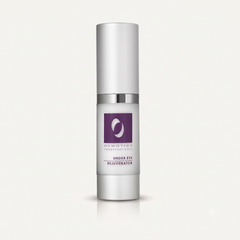
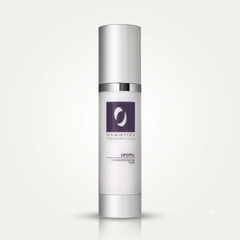
At Osmotics, our eye care is built around peptides at clinical strength — because the under-eye needs targeted, gentle actives, not harsh ones. Our Under Eye Rejuvenator is a weightless peptide serum formulated for the two concerns that make eyes look tired: puffiness and dark circles.
It pairs Eyeseryl® (Acetyl Tetrapeptide-5) to help de-puff the look of bags with the Haloxyl™ complex to target the appearance of dark shadows, plus hyaluronic acid and vitamin E to hydrate and smooth crepey lids. Soft light-diffusers give an instant, more-awake finish, and the fluid absorbs quickly so it sits comfortably under concealer and makeup. Individual results may vary.
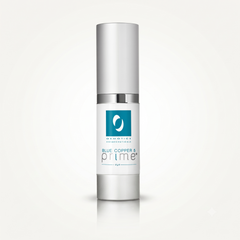
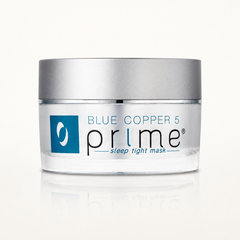
If your concern leans more toward firmness and fine lines around the eyes, our Blue Copper 5 PRIME Eye brings our signature copper-peptide technology to the eye area.
When to see a professional
Topical care can meaningfully improve the look of most dark circles and puffiness — but it has limits. Consider seeing a dermatologist or qualified practitioner if:
- Your circles are clearly structural (deep tear-trough hollowing) — dermal fillers or other in-office options address volume in ways skincare can't.
- You have persistent, pronounced bags from shifted fat that don't respond to topical care.
- The darkness appeared suddenly, affects one eye only, or comes with swelling — always worth a professional check.
Frequently asked questions
Can you actually get rid of dark circles for good?
It depends on the type. Pigmented and vascular circles can often be visibly improved with consistent skincare and healthy habits. Purely structural (shadow) circles are about facial contour, so skincare improves the surrounding skin but a professional may be needed to fully address the hollow.
How long until I see results from an eye product?
Some effects, like optical brightening and de-puffing, can look immediate. Genuine improvement in the look of pigment and firmness builds gradually — typically over several weeks of consistent, twice-daily use. Individual results vary.
Are dark circles genetic?
Often, yes — both pigmented and vascular circles have a strong hereditary component. Genetics set the tendency, but lifestyle, sun exposure and skincare all influence how visible they are.
Do eye creams help with bags?
They help with the look of bags caused by fluid and mild laxity — peptides and caffeine are your friends here. Bags caused by shifted fat pads are structural and usually need a professional to fully resolve.
Is caffeine or peptides better for dark circles?
They do different jobs, so ideally both. Caffeine gives a quick de-puffing, more-awake look and helps vascular circles; peptides work over time to support firmness and target the look of puffiness and discoloration.
Key takeaways
- Dark circles come in three types — pigmented (brown), vascular (blue/purple) and structural (shadow) — and most people have a mix.
- Use the stretch and lighting tests to identify yours, because each type responds to different ingredients.
- The most supported actives are peptides (Eyeseryl®, Haloxyl™), caffeine, vitamin C and niacinamide, retinol and hyaluronic acid.
- Habits matter — sleep, salt, hydration, allergy control and daily SPF all move the needle.
- Be consistent and gentle, give it several weeks, and see a professional for structural or sudden concerns.
This article is for educational purposes and describes the appearance of skin; it is not medical advice. Individual results may vary.
1 Eyeseryl® (Acetyl Tetrapeptide-5) supplier clinical study: 20 female volunteers, twice-daily application, 60 days; dermatologist-graded reduction of under-eye puffiness at days 15 and 60. Figures refer to the ingredient at its studied dose, not any finished product.
2 Haloxyl™ supplier clinical study: 22 volunteers, twice-daily application of a 2% cream-gel, 56 days; instrumental colorimetry of the under-eye area. Ingredient-level result, not a finished-product claim.