
 Serums
 Creams & Moisturizers
 Eye Care
 Cleansers & Toners
 Masks & Treatments
 Complexion & Glow
 Body & Bath


Nasolabial Folds: What Causes Them and How to Soften the Look
The short answer
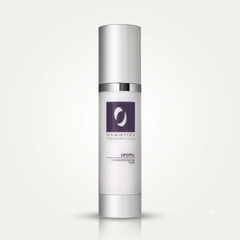
Nasolabial folds are the natural creases running from the nose to the mouth — everyone has them, and ageing just makes them deeper as the cheek loses collagen and slides downward. You can't erase them, but you can visibly soften the look by firming the mid-face with peptides, renewing with retinol, plumping with hyaluronic acid and wearing daily SPF. Because most of a smile line comes from lost mid-face support, a needle-free firming serum like Lipofill Skin Firmness Restoration, made specifically for lost volume and nasolabial folds, is the most direct way to restore the look of firmness.
Smile lines. Laugh lines. Parentheses. Whatever you call them, the two creases that run from the sides of your nose down to the corners of your mouth are known clinically as nasolabial folds — and they are one of the most searched-for, most misunderstood signs of facial aging. Here's the reassuring part: everyone has them. They are a normal part of facial anatomy, and a face without any would look strangely flat. What changes with time is how deep and shadowed they become.
This guide breaks down exactly what nasolabial folds are, why they deepen, how to tell which type you're dealing with, and the science-backed ingredients and habits that genuinely soften the look — no miracle promises, just what the evidence supports and how to build a routine around it.
What exactly are nasolabial folds?
A nasolabial fold is the natural crease where the cheek meets the upper lip. The fold itself is anchored by muscle and connective tissue — it's structural, which is why it never disappears entirely. When you smile, the cheek lifts and the fold deepens; at rest, it softens again. In youthful skin the fold is faint and springs back easily. Over time it becomes more etched and casts a shadow, which is what most people are really reacting to when they say their smile lines have "gotten worse."
Crucially, nasolabial folds are usually less about the line itself and more about what's happening above it — in the mid-face and cheek. As the cheek loses support and drifts downward, it stacks against the fold and deepens it. That's why treating smile lines is really about restoring the look of firmness and support to the whole mid-face, not just the crease.
Why nasolabial folds deepen with age
Several changes happen at once, which is why folds tend to become more noticeable from the mid-30s onward:
- Collagen and elastin decline. From our mid-20s we lose collagen steadily — around 1% a year — and the skin's springy elastin weakens. Skin becomes less firm and less able to bounce back, so folds set more deeply.
- Loss of facial volume. The fat pads that plump the cheek shrink and slide downward with age. As mid-face volume drops, the cheek no longer sits high and full, and the nasolabial fold becomes the "crease" where it collects.
- Bone remodeling. The facial skeleton itself changes over decades — the mid-face and jaw subtly recede — reducing the scaffolding that once held everything taut.
- Repeated expression. A lifetime of smiling, laughing and talking folds the skin in the same place thousands of times, and skin with less collagen keeps the crease rather than recovering.
- Sun exposure. UV is the single biggest controllable accelerator: it breaks down collagen and elastin (photoaging) and is estimated to drive the majority of visible facial aging.
- Gravity, sleep position, weight changes and smoking all add up over time — side-sleeping presses the fold nightly, rapid weight loss deflates the cheek, and smoking starves skin of oxygen and degrades collagen.
The two types of nasolabial folds (and why it matters)
Just as dark circles come in types, so do smile lines — and knowing yours points you to the right approach. Most adults have a mix, but usually one dominates.
1. Dynamic folds (movement-driven)
These appear or deepen mainly when you move — smiling, laughing, talking — and soften at rest. They're driven by muscle action on skin that's beginning to lose bounce. How they behave: much fainter when your face is relaxed.
2. Static folds (present at rest)
These are visible even when your face is completely relaxed, because they're driven by volume loss and skin laxity rather than movement. How they behave: etched and shadowed in a neutral expression, and they don't change much when you stop smiling.
The 30-second self-test
Not sure which you have? Try this in a mirror:
- Relax your face completely. If the fold nearly disappears, it's mostly dynamic — great news, because it responds well to firming skincare and prevention. If it's still clearly there, there's a static component driven by volume and laxity.
- Gently lift the cheek upward and outward with your fingertips. If the fold softens dramatically, the issue is largely mid-face volume and support — the area to focus firming care on.
- Tilt toward the light. If the fold reads mainly as a shadow that changes with lighting, camouflage and surface-smoothing help a lot alongside firming actives.
If more than one thing is going on, that's completely normal — and it's why the most effective routines layer a few complementary ingredients rather than chasing a single "fix."
The ingredients that actually help (matched to your type)
Here's where knowing your type pays off. These have the strongest support for softening the look of nasolabial folds — look for them on the label.
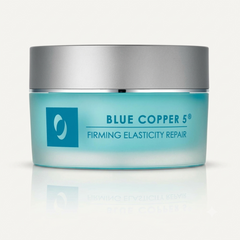
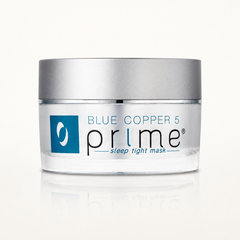
Peptides — for firmness and the look of support. Peptides are short chains of amino acids that signal skin to support its own firmness over time. This is the backbone of the Osmotics approach. Our signature copper peptides (Blue Copper 5) and collagen-boosting peptide complexes are used to help skin look firmer and more resilient, which is exactly what a deepening fold needs. A concentrated peptide treatment like the Blue Copper 5 Intensive Ampoule Series is a good way to give the mid-face an intensive course, while the Blue Copper 5 Firming Elasticity Repair cream delivers collagen-boosting peptides at their full clinical dose for daily use.
Volume-supporting firming serums — for static, volume-loss folds. Because so much of a smile line comes from mid-face support, a targeted firming treatment is often the single most useful step. Our Lipofill Skin Firmness Restoration is a needle-free firming serum designed specifically for lost facial volume, nasolabial folds and hollow cheeks — it presses cleanly into the skin before your moisturizer and works to restore the look of firmness and support where the face has begun to slacken. It's the most direct answer in the range for smile lines.
Retinol — for collagen support and skin quality. Retinol is one of the best-studied anti-aging actives, supporting collagen to help firm and smooth the look of skin over time. It's ideal for static folds and general laxity. Introduce it gradually — a lower strength a few nights a week — and always pair with daytime SPF. Our Anti-Aging Super Serum brings this kind of renewing support into the routine.
Hyaluronic acid — for hydration and instant plumping. HA holds up to a thousand times its weight in water, plumping the look of the crease and giving an immediate smoother finish. It helps every type of fold. A dedicated Hyaluronic Acid Serum layers beautifully under your firming steps.
Vitamin C — for collagen support, tone and prevention. A brightening antioxidant that supports collagen and helps defend against the UV-driven breakdown that deepens folds in the first place. Our Vitamin C Serum is a smart daytime partner to SPF.
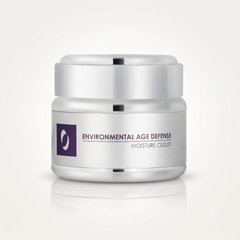
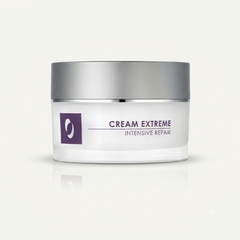
Niacinamide and rich moisturizers — for surface smoothness. Well-hydrated, barrier-strong skin creases less and reflects light more evenly, so folds cast a softer shadow. A cushioning moisturizer like the Environmental Age Defense Moisture Cloud, or the richer Cream Extreme Intensive Repair for very dry skin, keeps the area supple.
The takeaway: volume-loss (static) folds respond best to firming, volume-supporting treatments like Lipofill plus retinol; movement-driven (dynamic) folds love peptides, hyaluronic acid and prevention; and shadow benefits from surface-smoothing hydration and daily SPF. Mixed types — the most common — benefit from layering several of these.
Habits that make a real difference
- Wear SPF every single day. UV is the biggest controllable cause of collagen loss — daily broad-spectrum protection is the most effective anti-fold habit there is.
- Mind your sleep position. Side- and stomach-sleeping presses the fold into the pillow night after night; sleeping on your back (or a silk pillowcase) reduces the crease.
- Don't smoke. Smoking accelerates collagen breakdown and deepens lines around the nose and mouth.
- Keep weight stable. Rapid loss deflates the cheek and can make folds look deeper.
- Hydrate, inside and out. Well-hydrated skin looks plumper and creases less.
- Be gentle. Apply products by pressing and patting upward toward the cheekbone rather than dragging down.
Building a simple firming routine
Morning: cleanse gently → antioxidant serum such as Vitamin C → firming treatment (Lipofill, pressed into the folds and cheeks) → moisturizer → always finish with SPF.
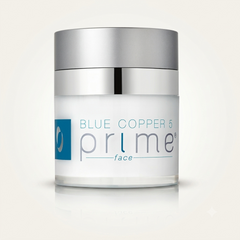
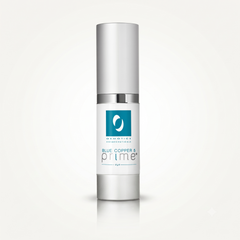
Evening: cleanse → Hyaluronic Acid Serum on damp skin → firming or renewing step (Lipofill, or a few nights a week your Anti-Aging Super Serum) → a firming cream such as Blue Copper 5 PRIME Face or Firming Elasticity Repair.
Apply firming products with upward, outward pressure toward the cheekbone, and give the routine consistent time — visible improvement in the look of firmness builds over several weeks. If you'd rather start with a coordinated set, the Face Set Collection brings the core steps together. Individual results may vary.
How Osmotics approaches smile lines
At Osmotics, firmness is built around peptides at clinical strength — because a deepening fold is fundamentally a firmness-and-support concern. Our most targeted answer is Lipofill Skin Firmness Restoration, a needle-free firming serum created for exactly this: lost facial volume, nasolabial folds and hollow cheeks. It presses cleanly into the skin before your moisturizer and works to restore the look of firmness where the face has begun to slacken.
For all-over firmness, our copper-peptide creams — Blue Copper 5 PRIME Face and Blue Copper 5 Firming Elasticity Repair — support the whole mid-face, while the Intensive Ampoule Series gives a concentrated reset. And because firmness doesn't stop at the jawline, many customers pair their routine with Nécolleté for the neck and chest and Blue Copper 5 PRIME Eye for the eye area. You can explore the full range in our Loss of Firmness and Fine Lines & Wrinkles collections. Individual results may vary.
When to see a professional
Topical care can meaningfully soften the look of nasolabial folds — but it has limits. Consider seeing a dermatologist or qualified practitioner if:
- Your folds are deep and static, driven by significant volume loss — dermal fillers restore mid-face volume in a way skincare can't, and are the most common in-office option for smile lines.
- You want faster or more dramatic change than topicals can offer — options range from injectables to energy-based skin-tightening treatments.
- A fold appears suddenly or asymmetrically — always worth a professional check.
Skincare and in-office treatments aren't either/or: a strong firming routine helps maintain results and supports overall skin quality between appointments.
Frequently asked questions
Can skincare actually get rid of nasolabial folds?
Skincare can visibly soften the look of nasolabial folds — especially dynamic, movement-driven ones — by supporting firmness, plumping with hydration and improving skin quality. It won't erase a deep static fold caused by volume loss; that's where a professional and options like fillers come in. Realistic goal: a smoother, more supported-looking mid-face, not a perfectly flat face.
What is the best ingredient for smile lines?
There isn't one single hero — the best results come from layering peptides (for firmness), retinol (for collagen and skin quality), hyaluronic acid (for plumping) and daily SPF (for prevention). A targeted firming serum like Lipofill addresses the volume-and-support side directly.
At what age do nasolabial folds appear?
Everyone has nasolabial folds from birth — they're normal anatomy. They typically start to look deeper from the mid-30s to 40s as collagen declines and mid-face volume shifts, though sun exposure and genetics can bring that forward or push it back.
Do facial exercises or "face yoga" help?
Evidence is mixed. Some people find gentle facial exercise helps tone; others worry repeated movement could reinforce a crease. It's low-risk if gentle, but it's no substitute for sun protection and firming actives, which have far stronger support.
How long until I see results?
Hydration and plumping can look immediate. Genuine improvement in the look of firmness builds gradually — typically over several weeks of consistent, twice-daily use. Individual results vary.
Are fillers the only way to really soften deep folds?
For deep, volume-driven static folds, dermal fillers are the most direct in-office option because they replace lost mid-face volume. But a consistent firming routine improves skin quality, supports the surrounding area and helps maintain a smoother look — and for milder or dynamic folds, topicals alone can make a real visible difference.
Key takeaways
- Nasolabial folds are normal anatomy — the goal is to soften how deep and shadowed they look, not erase them.
- They come in two main types: dynamic (movement-driven) and static (volume-and-laxity driven) — most people have a mix.
- Use the relax-and-lift test to identify yours, because each type responds to different care.
- The most supported actives are peptides, retinol, hyaluronic acid and vitamin C, with a targeted firming serum like Lipofill for the volume-and-support side.
- Daily SPF is the single most effective prevention habit; sleep position, hydration and not smoking all help.
- Be consistent and gentle, give it several weeks, and see a professional for deep static folds.
This article is for educational purposes and describes the appearance of skin; it is not medical advice. Individual results may vary.