
 Serums
 Creams & Moisturizers
 Eye Care
 Cleansers & Toners
 Masks & Treatments
 Complexion & Glow
 Body & Bath


Blue Copper 5 PRIME Eye — Clinical Results
Clinical Results
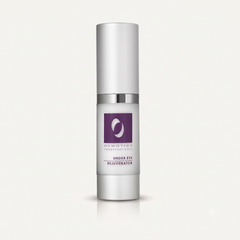
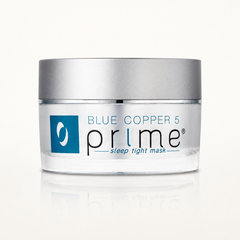
Blue Copper 5 PRIME Eye
Every active in PRIME Eye is clinically dosed — checked against its own clinical study before it earns a place. Here is the evidence.
What users saw in 4 weeks


Photography of an individual user following twice-daily use for 4 weeks. Individual results vary.
saw a lifted, firmer eye area
saw reduced crow’s feet
said dark circles looked reduced
said their eyes looked more awake
Consumer perception study over 4 weeks of twice-daily use.
The ingredient evidence
Matrikine peptide complex
Clinically dosed — an exact match to the studied levelThe matrikine peptide duo that signals the skin to rebuild collagen. PRIME Eye carries it at the same concentration used in the clinical study below.
| Clinical result vs placebo (2 months) | Figure |
|---|---|
| Surface area occupied by deep wrinkles (>200µm) | -44.9% |
| Main wrinkle density | -37.0% |
| Average wrinkle depth | -15.1% |
| Skin tone | +19.5% |
Method: Two panels of 23 volunteers aged 39–74; half-face, placebo-controlled, twice daily for 2 months; confocal analysis of silicone skin imprints. A separate 4-month study (two panels of 30 volunteers) recorded -27% average wrinkle depth. Supplier clinical study of the ingredient; not conducted on the finished Osmotics product.
Laboratory evidence
In-vitro, same dossierIn fibroblast cultures, the same peptide complex significantly increased the synthesis of the skin’s core structural proteins.
| Protein synthesis | Increase |
|---|---|
| Collagen I | +258% |
| Hyaluronic acid | +179% |
| Fibronectin | +164% |
Method: In-vitro fibroblast culture study by the ingredient manufacturer. Laboratory results; not a measure of results on human skin.
Firming peptide (acetyl tetrapeptide-2)
Clinically dosed — an exact match to the studied levelA firming peptide that works against gravity — increasing collagen and functional elastin synthesis and reinforcing the focal adhesions that hold skin cells together, helping keep the delicate eye-area skin taut. PRIME Eye carries it at its clinically studied dose.
| Clinical result (56 days) | Figure |
|---|---|
| Skin firmness (reduced maximal deformation) | +25.2% |
| Overall skin elasticity | +16% |
Method: Women aged 40–60 with sagging skin and loss of elasticity; twice daily for 56 days. Visible lifting of the facial contour also recorded. Supplier clinical study of the ingredient; not conducted on the finished Osmotics product.
Eye-contour active (Beautifeye®)
At its studied use levelA botanical eye active (Albizia julibrissin bark extract with darutoside) that targets the drooping, hooded look of the upper lid, smooths crow’s-feet and fades the redness behind dark circles.
| Clinical result vs placebo (2 months) | Figure |
|---|---|
| Drooping eyelid surface | -61% |
| Eyelid fold height (less hooded) | -91% |
| Crow’s-feet wrinkle volume | -34% |
| Crow’s-feet wrinkle depth | -33% |
| Dark-circle redness | -32% |
Method: 24 women (mean age 60, 40–79) with upper-eyelid folds and crow’s-feet applied a cream containing 3% of the active twice daily for 2 months, vs placebo. Supplier clinical study of the ingredient; not conducted on the finished Osmotics product.
The confirmed peptide stack
Every active checked against the batch formulaUnlike most eye creams, every active in PRIME Eye is present at its supplier-recommended working concentration — verified against our manufacturing formula, not estimated from an ingredient list. The concentrations themselves are proprietary; what we publish is that each one clears the bar.
| Active | Clinically dosed |
|---|---|
| Matrikine peptide complex — collagen signalling | ✓ |
| Eye-contour active (Beautifeye®) — lift, crow’s-feet, dark circles | ✓ |
| Firming peptide (acetyl tetrapeptide-2) | ✓ |
| The Blue Copper peptide | ✓ |
Doses confirmed against the quantitative manufacturing formula and the suppliers’ published use levels; the formula itself is proprietary.
Blue Copper peptide
Pioneered by Osmotics in 1998Copper peptides are among the most-studied molecules in skin science, with peer-reviewed research since 1988 showing they stimulate collagen synthesis in fibroblasts and support the skin’s natural repair processes.
References: Maquart et al., FEBS Letters, 1988; Pickart & Margolina, Cosmetics, 2017.